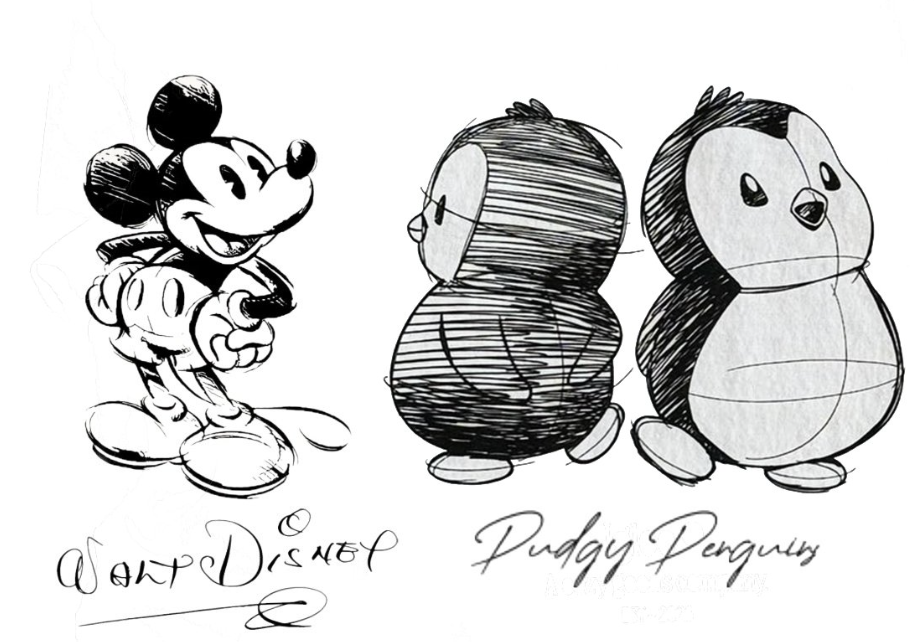
The internet's Mickey Mouse is a penguin.


Imagine this. It’s 1928. Disney is just getting started, and they decide to release 1,000 limited-edition “Digital Mickeys”—scarce, verifiable, owned by the people who believed in them early.
These Mickeys are programmable, tradeable, and come with perks tied to the company’s success.
Fast forward to today: What’s a first-edition Mickey Mouse collectible worth?
What if those early supporters could have fractional ownership, licensing opportunities, or governance rights over the Disney empire?
Now imagine if that idea wasn’t fiction. What if there was a global IP taking a community-first approach while building its empire?
In 2025, Pudgy Penguins is doing exactly that — blending IP, digital ownership, and network incentives into a modern platform.
In the search for asymmetric returns across digital assets, few opportunities reflect the convergence of culture, technology, and infrastructure as clearly as Pudgy Penguins. While most NFT projects remain siloed in speculative loops or social media novelty, Pudgy has quietly built a distribution engine rivaling traditional entertainment IP — and Abstract has emerged as its scalable backend for onboarding the next generation of consumer crypto users.
This report follows a narrative arc rooted in fundamentals: how NFTs can act as social capital, how Pudgy has converted that capital into global IP distribution, how Abstract extends that reach through infrastructure, and why a future airdrop could translate that alignment into direct value.
NFTs as Social Capital Assets
NFTs are often misunderstood as overpriced JPEGs — but the underlying mechanic is far more nuanced. NFTs encode scarcity, status, and access. In effect, they operate as programmable social capital.
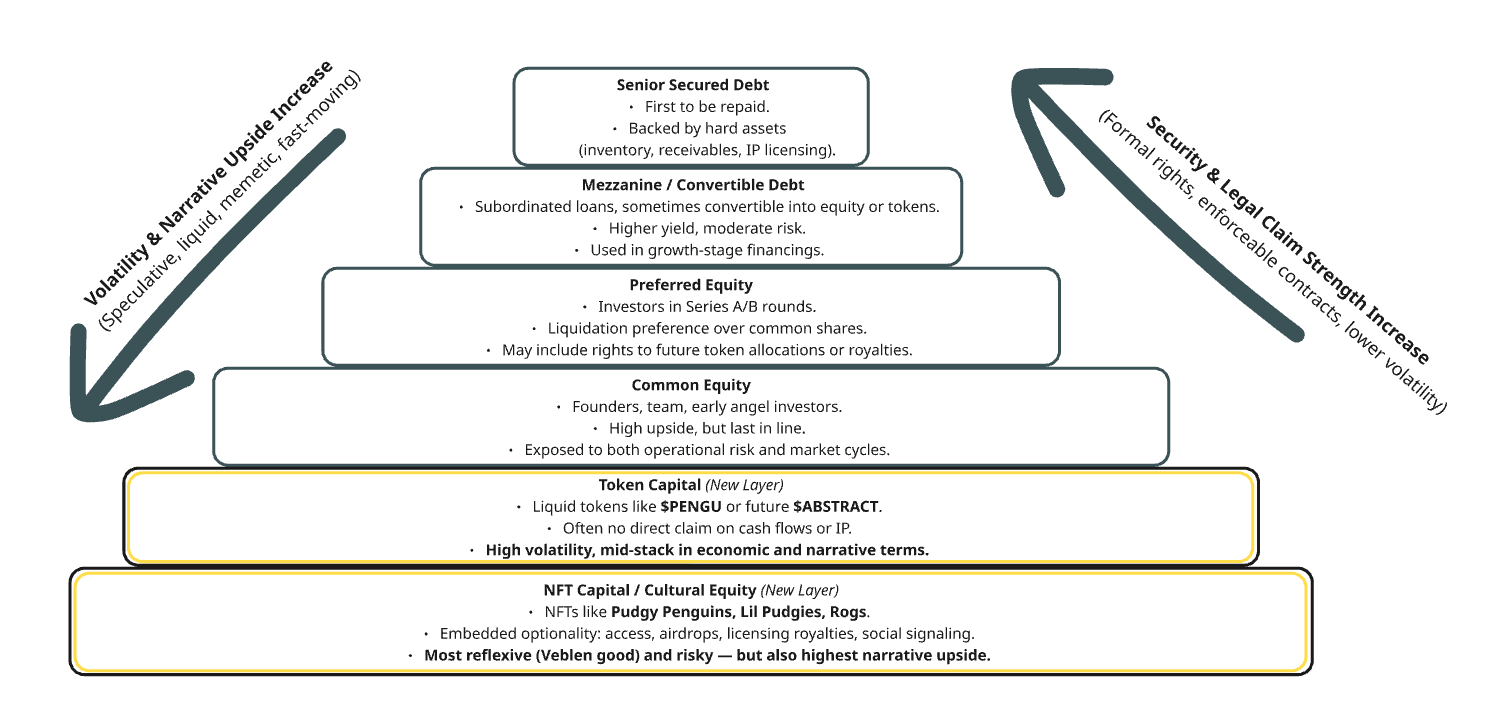
NFTs resemble a form of early network equity with leverage: They are tradable, publicly verifiable, and rich with symbolic value. Public sentiment make price reflexive on the way up, and on the way down.
Whether it’s a CryptoPunk signaling early adoption, a Bored Ape marking inclusion in a club, or a Pudgy Penguin surfacing across TikTok — the cultural and social signal value of NFTs drives demand well beyond utility.
Crucially, some NFTs evolve beyond symbols into franchisable assets. That’s where Pudgy enters the picture.
Pudgy Penguins: IP Expansion Through Distribution
Among NFT projects, Pudgy Penguins stands apart with real-world execution.
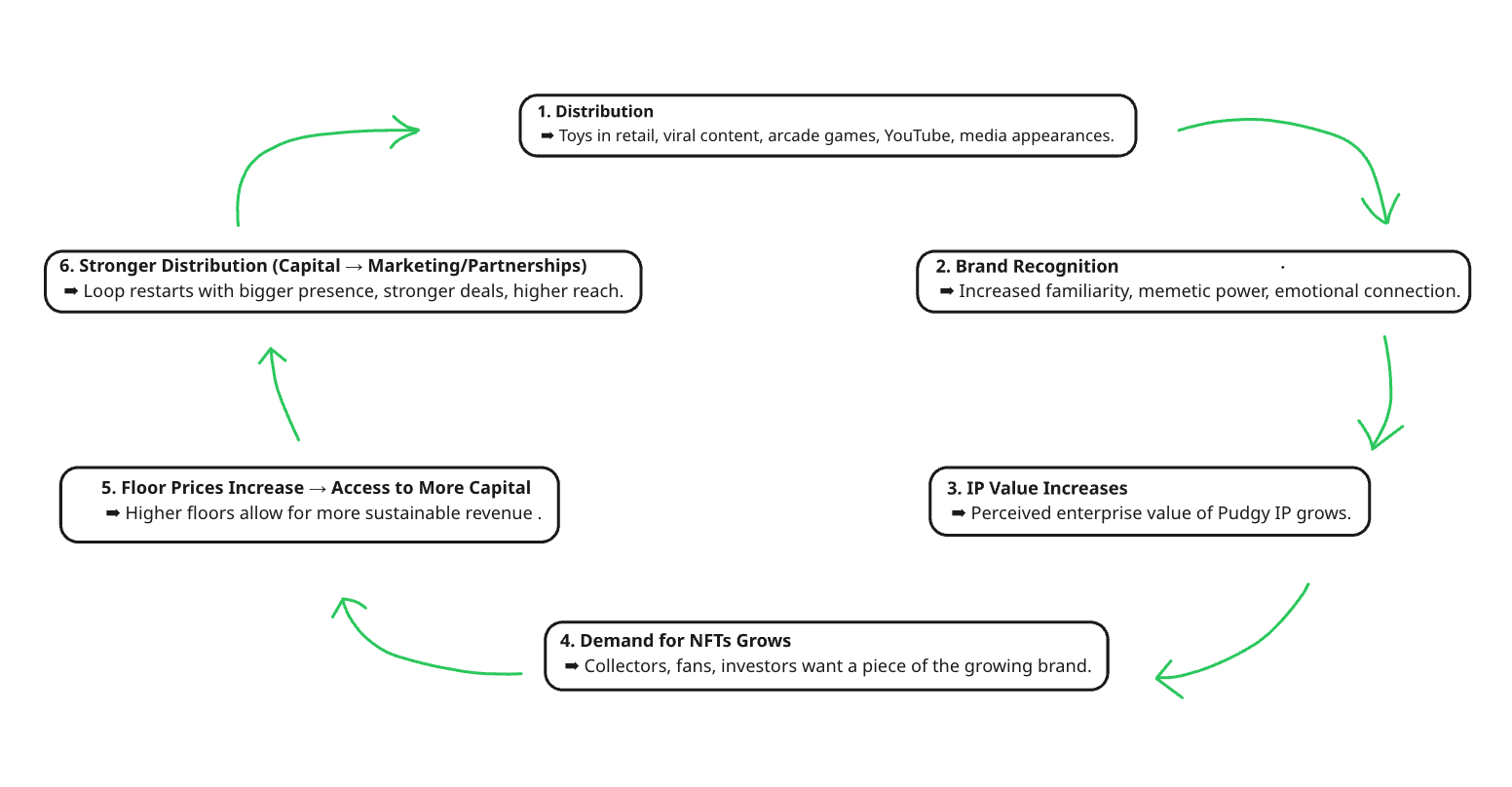
Rather than depend on Web3-native metrics (DAUs, Discord activity, etc.), Pudgy built something more difficult: global trust and attention through retail distribution and licensing, creating a flywheel effect of virality.
Originally launched in 2021 by anonymous founders ColeThereum and Mr. Tubby, Pudgy Penguins quickly gained popularity but also controversy. By January 2022, unfulfilled promises and internal disputes led to the team removal following a community vote.
In April 2022, entrepreneur Luca Schnetzler (Luca Netz) acquired the full Pudgy Penguins IP for 750 ETH (~$2.5M) through his firm Netz Capital, using personal capital to take over the brand and relaunch it with a long-term vision rooted in consumer products, global IP distribution, and owning the stack.
Following the acquisition, the new leadership team was formalized:
- CEO – Luca Schnetzler
- CMO – Nicholas Ravid
- CTO – Lorenzo Melendez
- CCO – Peter Lobanov
- COO – Dr. Kaizu
- CLO – Jennifer McGlone
Their mission, outlined in an April 2022 Medium post, centered on transforming Pudgy Penguins from a speculative NFT collection into a culturally resonant brand and consumer franchise — supported by both digital and real-world distribution channels.
And in just 3 years, they have achieved nothing short of historical.
Media Reach: Everyday on average, across Giphy, Tenor, Instagram, and Youtube — they receive +850 million views. That's +25 billion views per month.
Licensing: Random House Kids (book publishing), PEZ (consumer products), NASCAR, Lotte Group, Adam Bomb,
10,000+ Retail Stores, 10M+ sold: Plush toys with web3 onboarding are sold in Walmart, Walgreens, Target, Amazon, CVS, Barnes and Nobles, Five and Below, Gamestop, Macys, Toys R us, Smyths Toy Stores, Big W, Hot Topic, F.y.e.
Project Overpass: Pudgy enabled NFT holders to license their IP likeness back to the brand — a structural shift in how fans and IP co-create value.
Arcade Machines :500+ Polar Challenge arcade machines distributed in Dave & Buster’s, Chuck E. Cheese nationwide.
5 Games, Pengu Clash, a telegram native game had 2M users on the waiting list. The other 4 are a trading card game, browser game, mobile game, and a fully on-chain one, My Neighbor Alice.
Partnerships: Luftansa, WME, Line Friends, Minini
News/Media: Featured on Fox News, ABC News, Rolling Stone, Yahoo Finance, NBC, Good Morning America, Coffee with America, BloomTV, Suncoast View, TPBN, Fintech TV, and has been on the iconic NYSE floor screens
I almost forgot to breathe.
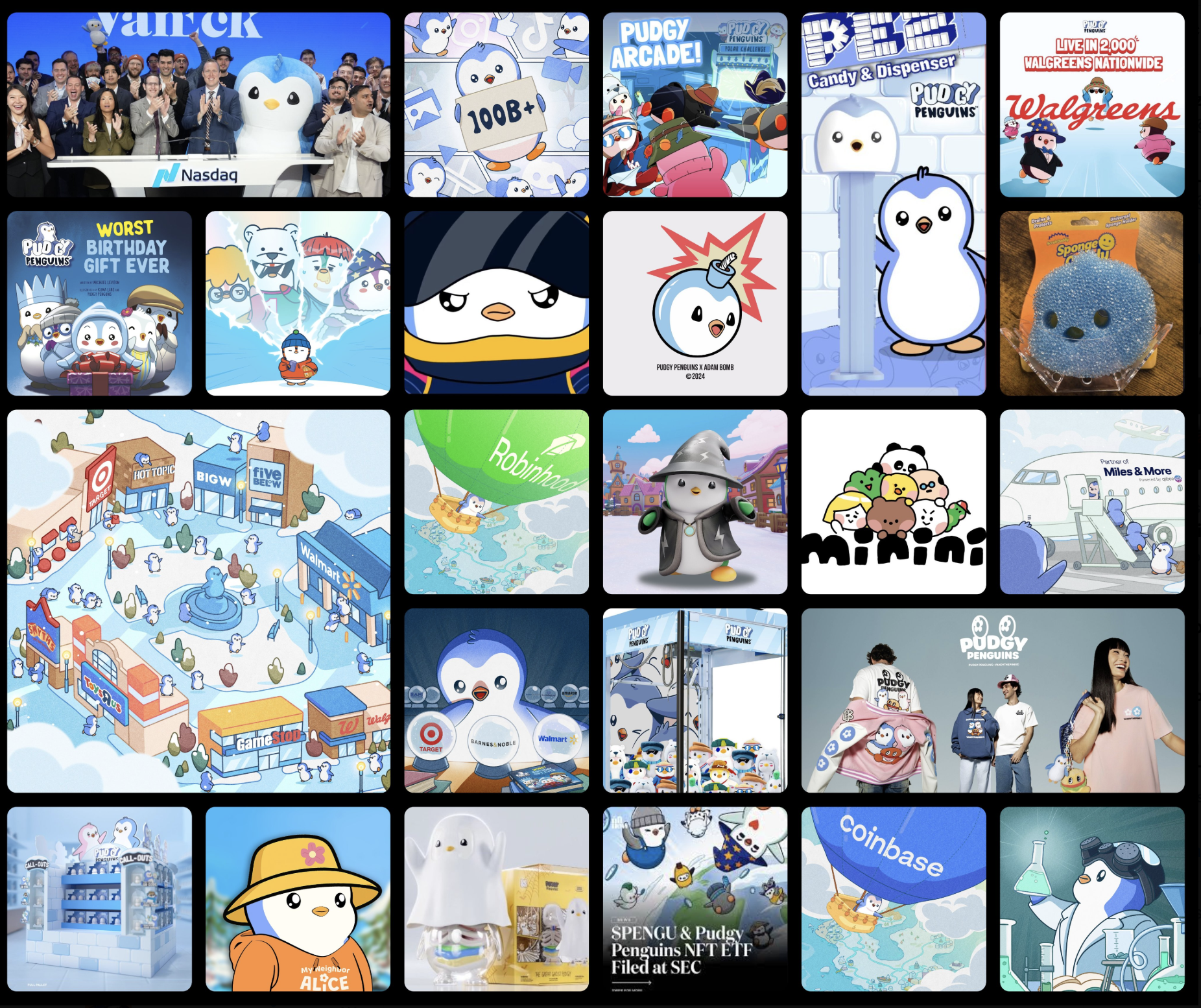
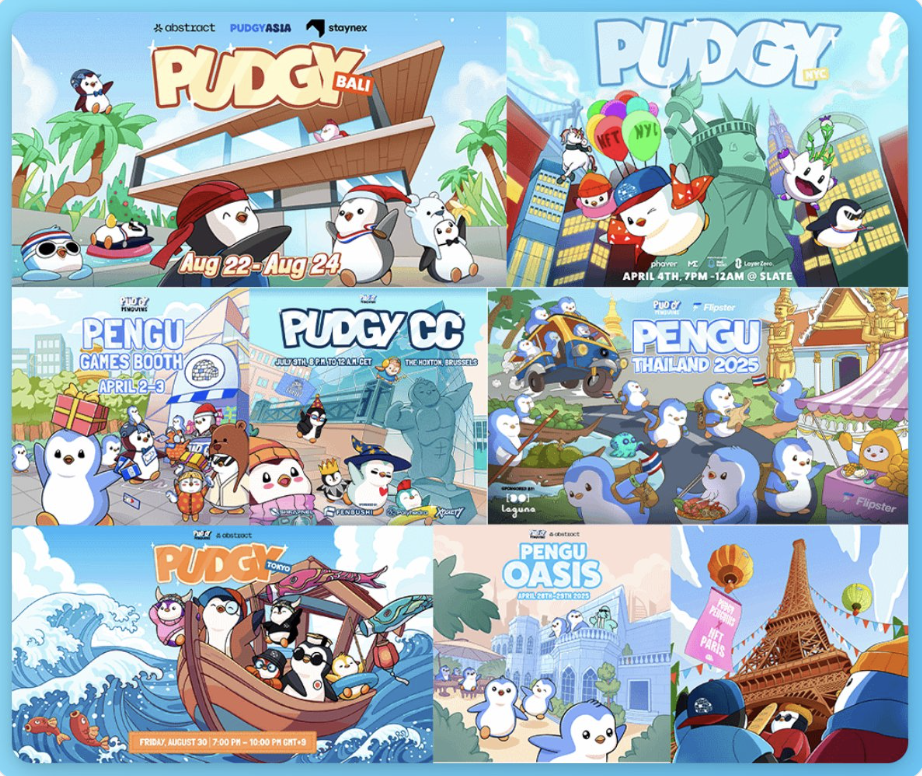
On a global mainstream audience front, they are crushing it. Now how are they doing internally, for the crypto native audience? They consistently have top events at every big crypto conference. The mindshare capture for builders in web3 is #1. With nearly every brand open for collaboration.
So Pudgy Penguins are in the minds of the global retail audience, and in the minds of global crypto builders. Well, what about in the financial world?
December 2024, the team launched a "social currency" called $PENGU. It was the 8th largest crypto airdrop of all time. Over 50 percent of supply went to eight million wallets.It was a full-scale test of mass distribution, and now is another vehicle for them to reach the investor audience.
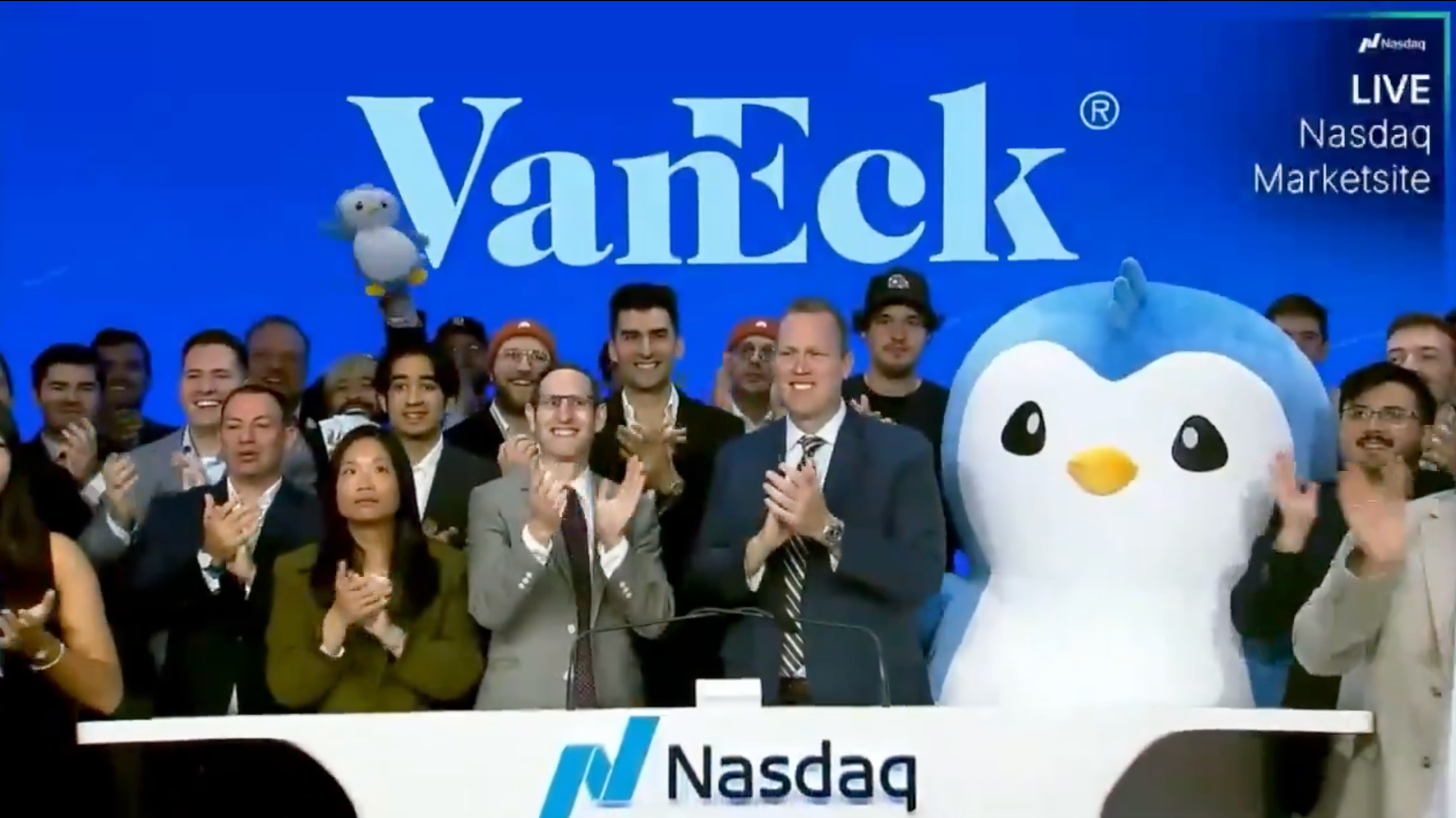
Additionally, to add a more serious note to it, Pudgy Penguin is the first company ever to have an NFT in a ETF application that is filed by the CBOE. Reaching the likes of SOL, XRP, DOGE. This ETF would hold 85-95% of $PENGU meme coin, and 5-15% of Pudgy Penguin NFTs.
Seems like they’re becoming institutional Penguins.
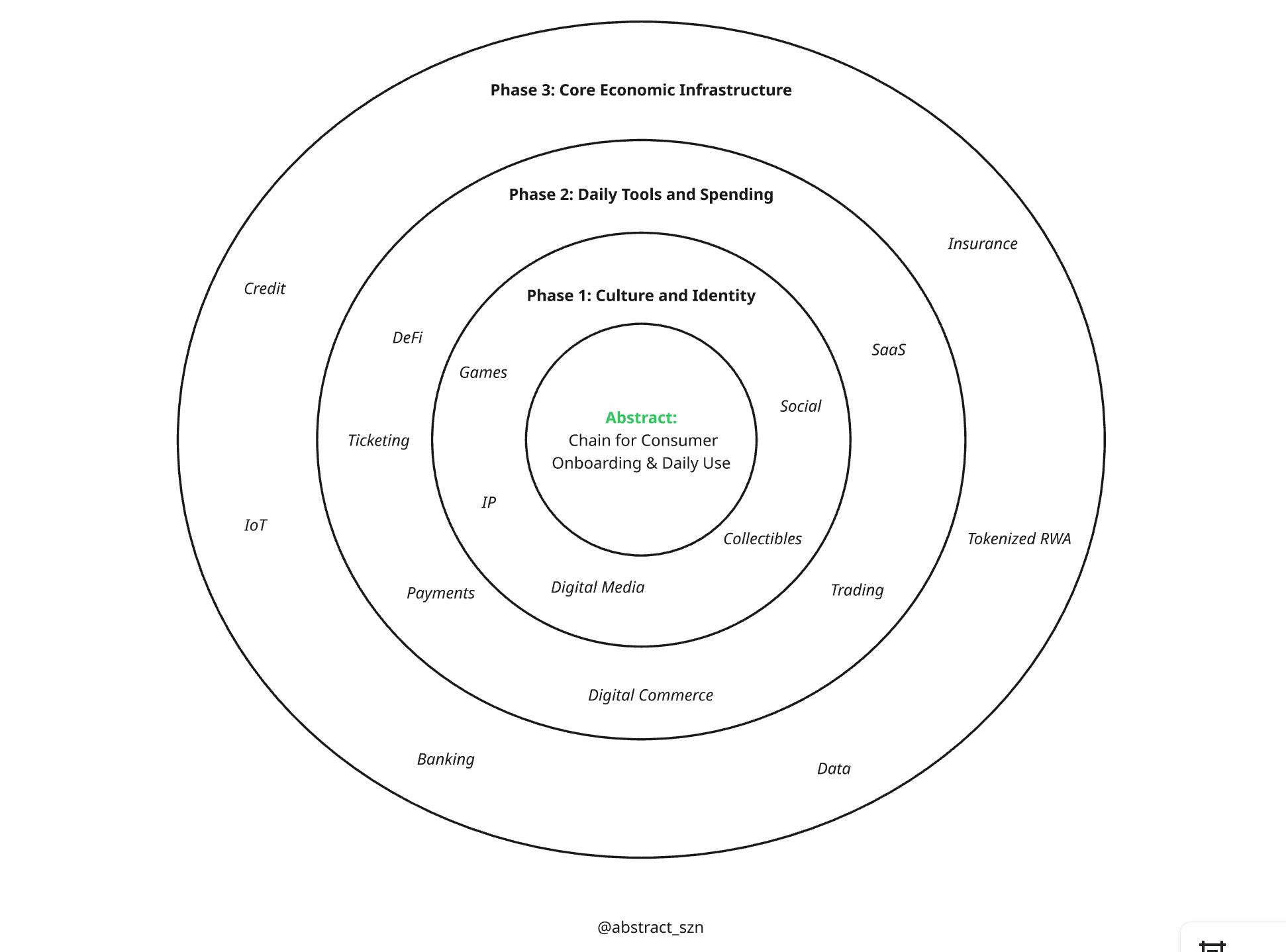
in Web3, owning attention isn't enough. You need to own the rails. That’s why in early 2024, the Pudgy team quietly acquired a ZK-powered Layer 2 chain known as Frame — and relaunched it as Abstract Chain. Turning their mastery of retail distribution into a full-stack ecosystem.
Owning the Stack: Why Pudgy acquired Frame (now Abstract Chain)
Pudgy had mastered the top of the funnel: attention, distribution, retail. But the infrastructure layer was still outside their control. To scale the brand digitally, they needed to control the full experience. That meant not just creating content and community, but also owning where transactions happen and where users onboard.
Abstract offers what most chains couldn’t: simple login, no seed phrases, and gasless transactions that feel like using a mobile app. They are trying to recreate the "iPhone moment" for crypto.
The idea was simple. If Pudgy wanted to bring millions into crypto, it couldn’t wait for the rest of Web3 to become user-friendly. So it built the on-ramp itself. A chain for consumer onboarding and to build real world use cases around.
Their track record speaks for itself, Abstract just hit $25M in ecosystem revenue (otherwise known as app GDP) after 5 months. That's #3 among all ETH L2s.
92M+ transactions processed, 323k+ stakers locked in, and the gaming side alone has pushed $10M+ in payouts.
Community First: The Role of XP and NFT Holders in the Token Launch
The Pudgy Penguins team has consistently prioritized its core community. Holders have been rewarded through product access, licensed content opportunities, and direct participation in new initiatives. This approach is expected to continue with the launch of the Abstract token.
XP is the engagement system used across the Pudgy and Abstract ecosystems. Users earn XP by interacting with products, holding NFTs, and participating in supported experiences. Think of it as 2008-era "Apple App Store equity points".
While the final distribution model on the $ABSTRACT token has not been confirmed, all available signals point to a structure that includes both XP participants and Pudgy NFT holders. The team has a strong record of allocating real value to early supporters, and this upcoming launch is likely to follow that same pattern.
Token Valuation Scenarios and Airdrop Impact
To frame potential upside, we modeled several token distribution and valuation scenarios.
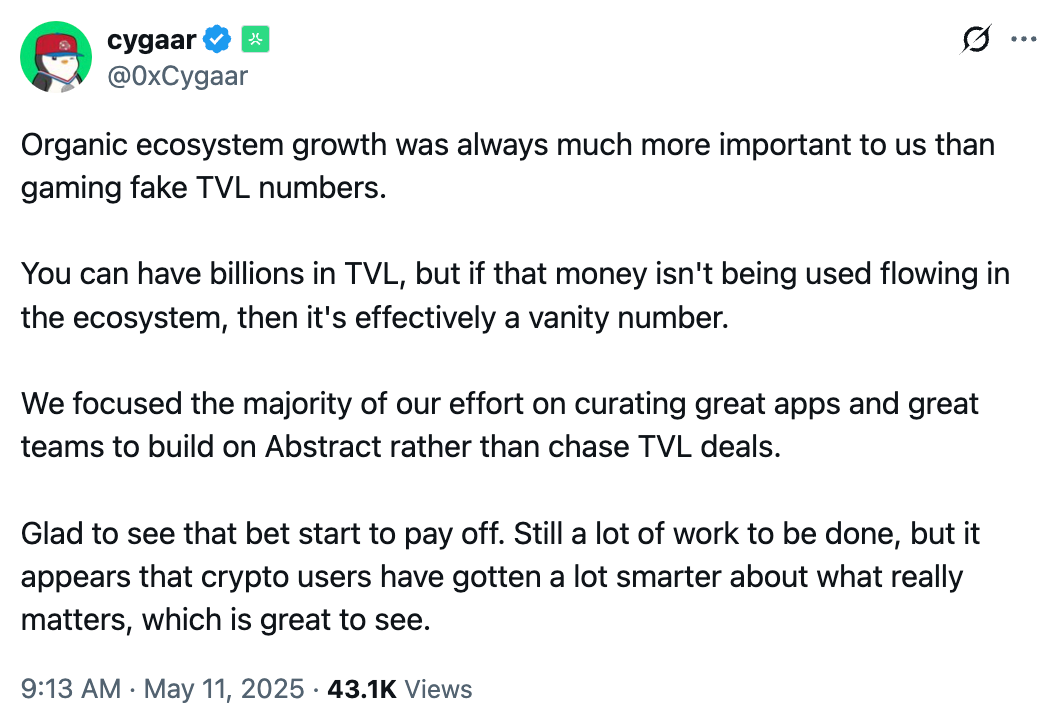
In our analysis though, we noted it would be unwise and immature to use metrics such as TVL (total value locked), or DAU. While in theory they are good indications of activity and interest. It is widespread knowledge that these can easily be gamed and faked. The Abstract team has communicated that they wont engage with those things, so we need a more accurate way to model its place in the market.
Ecosystem revenue — or “Chain GDP” — is harder to game. It captures total app-generated revenue across each L2 and reflects real activity
Because crypto markets move quickly (every 3 days it feels like), we annualized Abstract’s last 30 days of app revenue to reach a projected Ecosystem GDP of $9.1M. We then benchmarked it against other ETH L2s by dividing their FDV by their GDP to arrive at an “Ecosystem GDP Multiple.”
To maintain relevance, we excluded Polygon and Arbitrum (mature, priced-in ecosystems), and Starknet and Immutable (overhyped, but lacking PMF).
Below are the competitors valuations across the market.

Benchmarking against peer L2s, we modeled bear/base/bull FDV ranges. Using a conservative 20% NFT allocation (lower than $PENGU), the base case implies a $368M airdrop to Pudgy NFT holders.

We assume the same per-collection breakdown as the $PENGU airdrop (85% Penguins, 9.45% Lil Pudgies, 5.3% Rods).
At a $368M total airdrop value for $ABSTRACT, and assuming historical distribution ratios, estimated ROIs based on current NFT market caps are as follows:
| Collection | Airdrop Value | Market Cap | Estimated ROI |
|---|---|---|---|
| Pudgy Penguins | $313M | $208M | ~150% |
| Lil Pudgies | $35M | $63M | ~55% |
| Pudgy Rods | $20M | $6.5M | ~298% |
Even under conservative assumptions, the asymmetry is hard to ignore.
So What Does This All Mean?
If Disney were launching today, they’d be optimizing for viral moments, leveraging community-driven storytelling, and capturing value through internet-native capital markets.
But Disney isn’t starting today... They’re the incumbent. They don’t need to experiment.
Pudgy Penguins does.
And so far, they’ve shown the grit, creativity, and momentum to build the most viral IP to emerge from crypto.
Today, they have attention. If they can channel that into real economic activity on Abstract, they'll benefit from the shift toward crypto-native infrastructure and ride a powerful tailwind as attention compounds into liquidity, into usage, into culture.
And if they do, Pudgy Penguins NFTs might be the biggest winners from it.
That’s how empires start.