A New Medium Grows Up

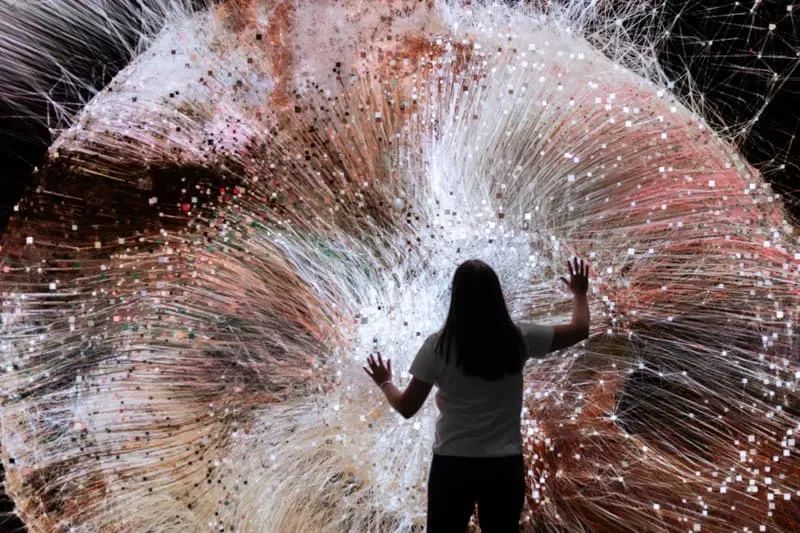
Artists and collectors generally accept all forms of art because what they ultimately support is expression. The medium is usually secondary. But when the medium is new, misunderstood, or embraced by only a small (and weird) group, it gets rejection and suspicion.
Instead of being categorized as art, you become the outlier not playing by the rules.
Digital art now carries the same critiques that every “new” art form once faced:
Photography (1800s)
Impressionism (late 1800s)
Film and Cinema (early 1900s)
Collage (Picasso, Braque)
Abstract Art (Kandinsky, Mondrian)
And now:
Digital Art (Beeple, Tyler Hobbs, Jack Butcher)
“You cannot touch it.”
“I can screenshot it.”
“It is not real art.”
“AI has no soul.”
“Too easy to create.”
Every major artistic shift has sounded like this at the beginning.
And last week at Art Basel Miami, that beginning finally felt like it ended.
HEADLINES:
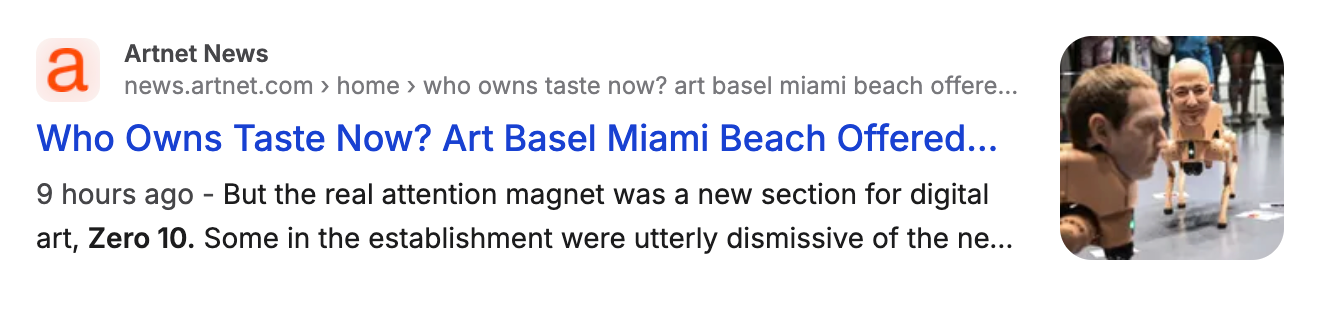
Digital art was part of the main fair, presented with intention and institutional confidence.
I did not expect the level of attention or excitement around it. In hindsight it makes sense, technology makes it more interactive. In some cases, the spectator is part of the art. But still, seeing it unfold in real time still surprised me.
Another surprise was how physical the works were. Screens, sculpture, robotics, large prints, kinetic pieces, photography, motion works, conceptual objects, AI systems. Everything blended into a spectrum where digital is either a starting point or an endpoint, and either version can be deeply impactful.
Collectors were curious and engaged. Digital art invites interaction, and that makes the viewing experience more welcoming and approachable than traditional art. The room felt open and weird, and I love that.
Every work was filled with depth and beauty, but I want to highlight these 3 pieces because I think it flipped the script on everything.
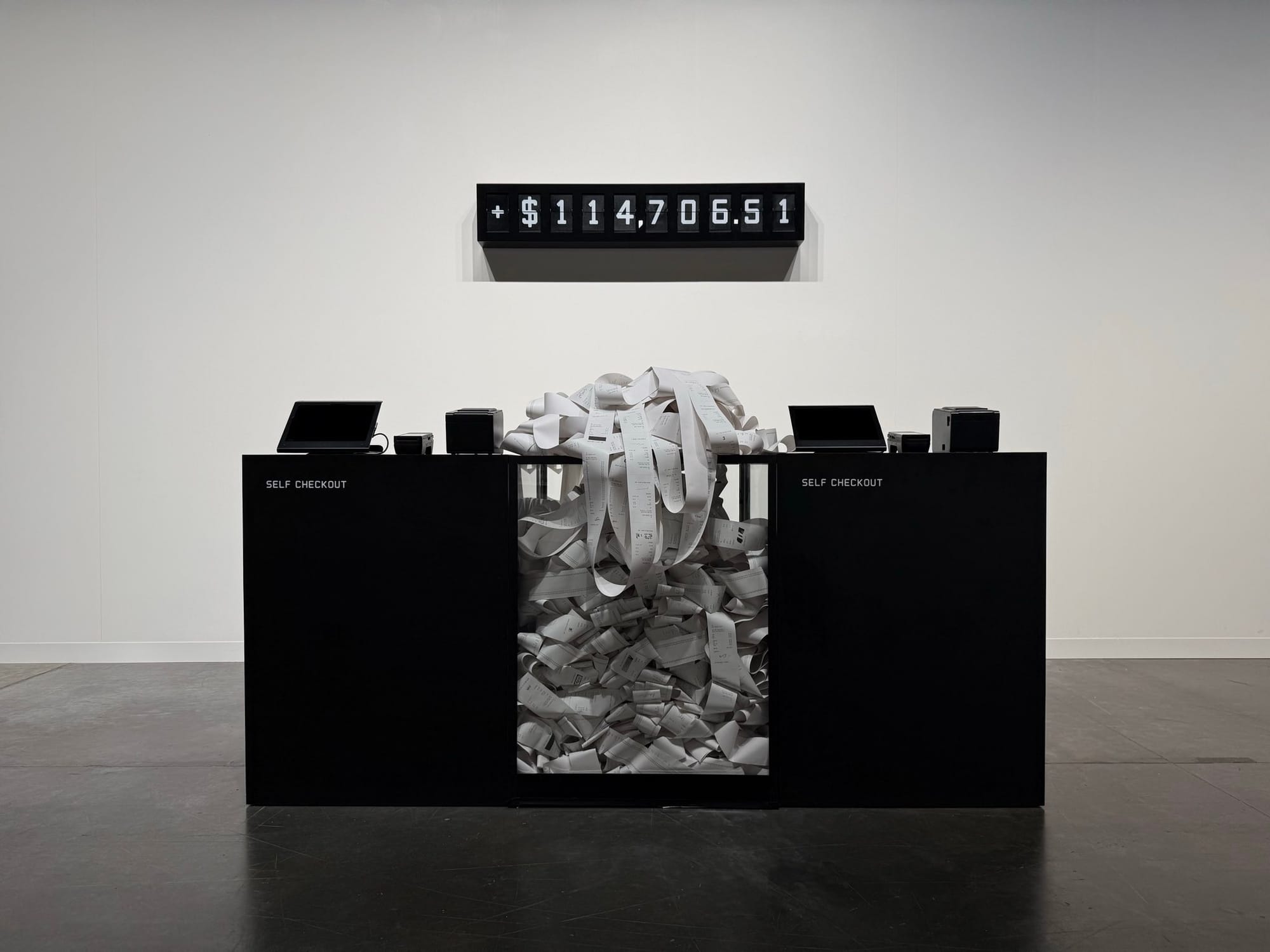
Jack Butcher
Jack explored the idea that NFTs are simply receipts. His piece created a recipt for every sale, and the receipt itself was the NFT. The experience felt collaborative, almost like you were helping create the artwork.
“The receipt itself has a seed phrase printed on the bottom, which creates a custodial wallet on Ethereum that holds the digital copy of the receipt,” Butcher explained.
At the end there was a live physical & digital auction for the whole buildout containing a glass box with a copy of everyones "Self-Checkout" signature.
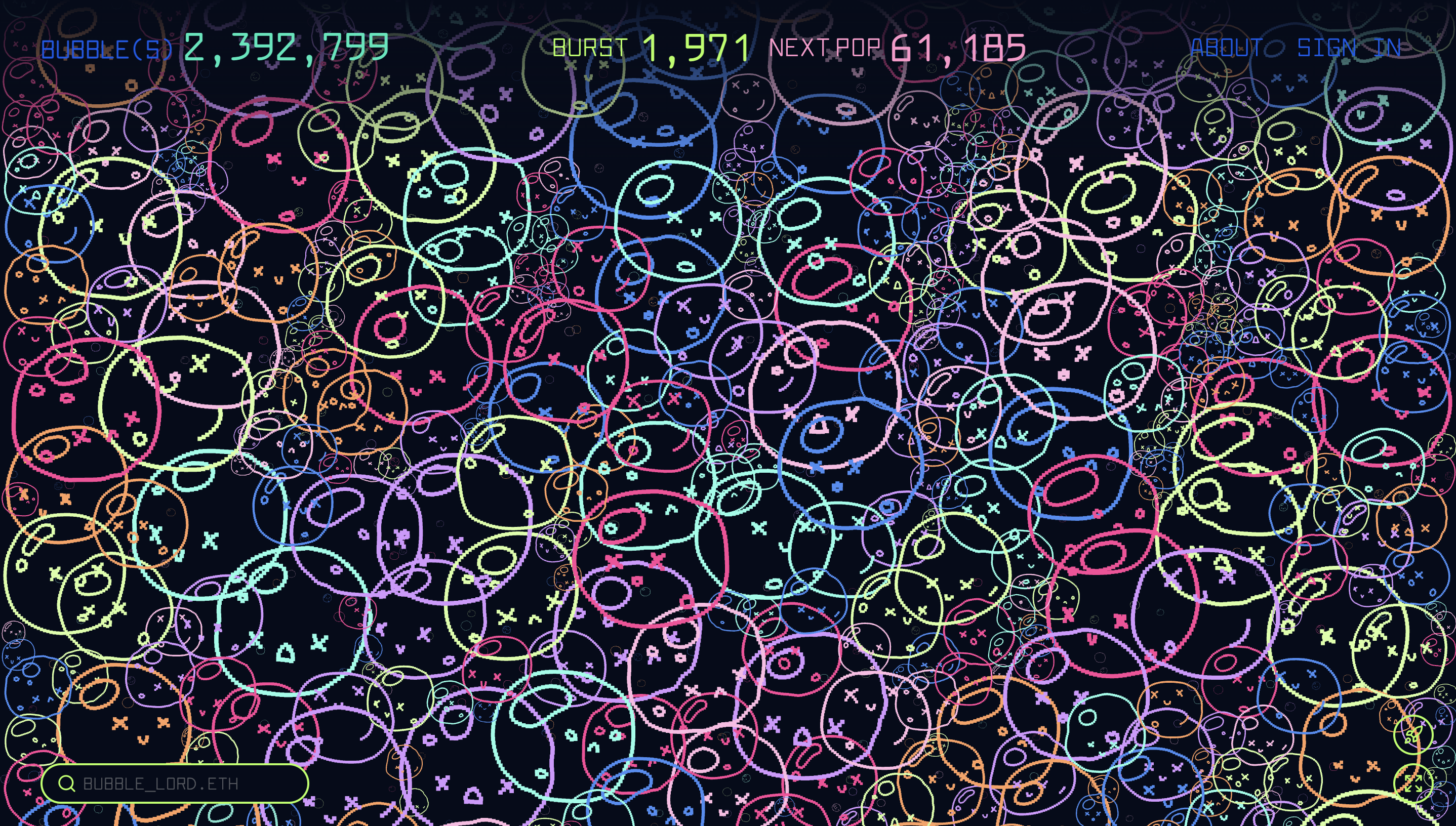
XCOPY
XCOPY played with the idea of NFTs being a bubble.
It was called "Coin Laundry", and after filling out a form on paper, you were handed a QR code to claim an NFT.
The NFTs were digital bubbles that will eventually pop and disappear. Ten years from now, only one bubble will remain unpopped. Who doesn't love a free lottery ticket.
The whole thing felt light and playful. People gravitated in before they even understood the mechanics. It captured the energy of early NFT culture in a really simple way.
Beeple
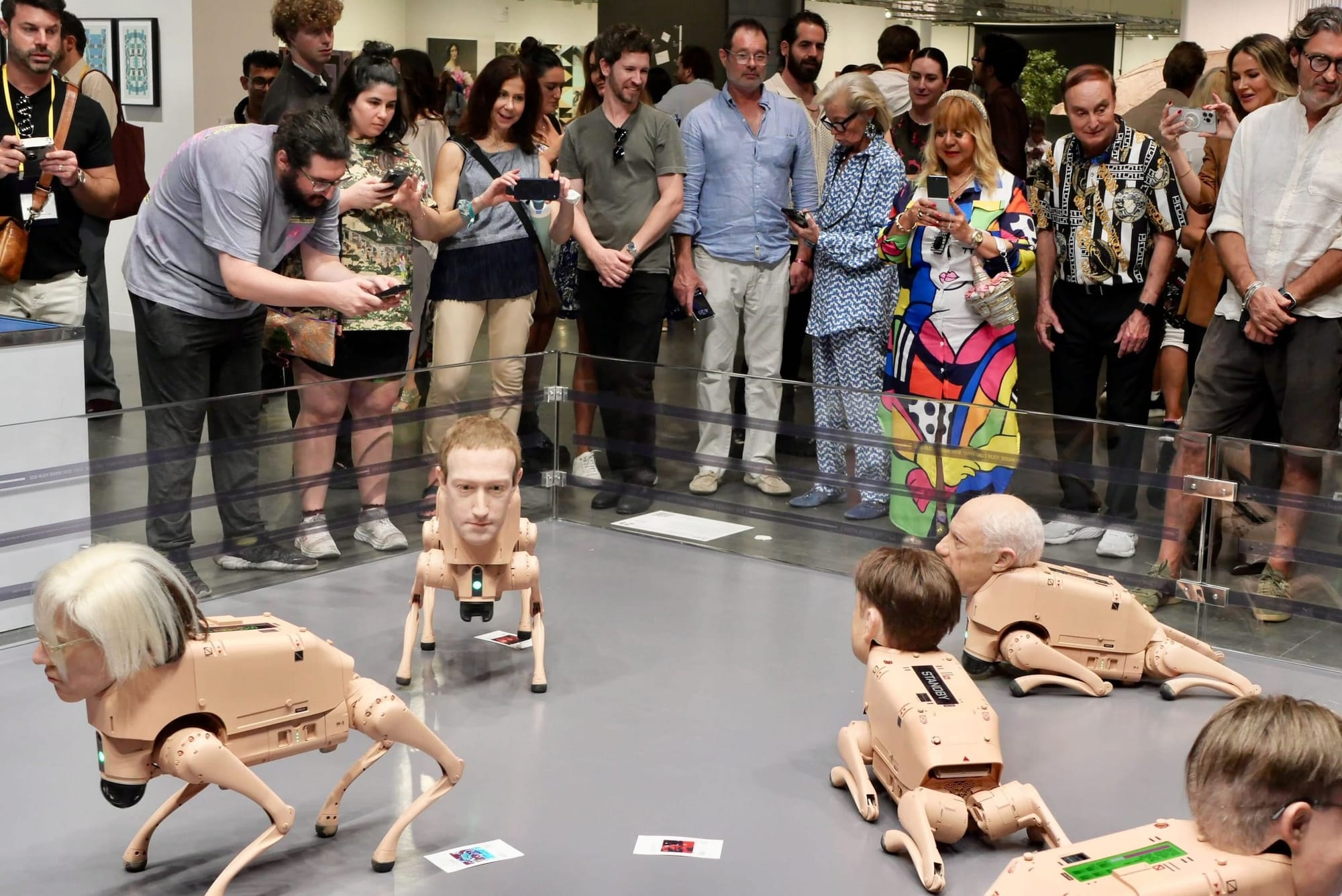
Beeple commented on the idea of NFTs being “Art for the Rich”. Robotic dogs walked around generating images based on what they saw. The robots "pooped" (printed) the works and beeple's team handed them out for free. Many people were genuinely intimidated by the robots. I mean look at them...
Regardless, 256 prints were NFTs that are now selling for as high as 10 eth (around ~$30k USD).
Beeple knows how to give back to the community.
These pieces treated NFTs as cultural material. They felt like conceptual art, cultural commentary, and social texture all at once.
Zero10’s digital art section recorded approximately:
Primary sales of 3.25 million dollars
About 20% of buyers were new digital collectors
Meanwhile NFT based secondary sales 2.4 million dollars in the same time frame.
The broader Basel fair reported around 115 million dollars in sales for traditional art forms. Many galleries do not disclose their totals, so the real number may be closer to 200 million.
Digital art remains such a small fraction of the market, but the attention around it was not small at all. If anything it was THE story this year for the fair. Feels like the start of something.
One thing that caught me by surprise was seeing Ringers by Dmitri Cherniak on display. I have seen them a thousand times on screens, on price charts, in loan books, but seeing one in a Basel booth felt different. It made the whole movement feel less abstract. Like the work had crossed a threshold and entered a different conversation.
These are small signals, but they add up. Legitimacy is compiling.
Unless I am drinking the koolaid, it doesn't seem unreasonable to think that digital art can reach 1-2% of the global art market within the next decade. That is a 17 to 35 billion dollar market.
It also doesn't seem unreasonable to think that:
-It becomes a pillar of contemporary art.
-It becomes a parallel market.
-It merges into physical formats instead of competing with them.
And then we just call it "Art"
The biggest mistake we can make
Institutions welcomed digital art partly because the collector base is changing. A generational wealth transfer is happening in real time, and the next generation grew up online. Their taste, values, and buying habits are completely different from the generations that shaped the traditional art world. As legacy art sales soften, institutions are now forced to pay attention to a new collector base.
But there is something important to watch out for.
The biggest mistake we can make is to start acting like the goal is to be accepted by the old system.
Kate Vass, who has been pushing digital art forward since her gallery’s 2018 blockchain exhibition, has written about this tension better than most. She highlights a contradiction that is easy to ignore when everyone feels excited.
A thought stream from her recent pieces on her website:

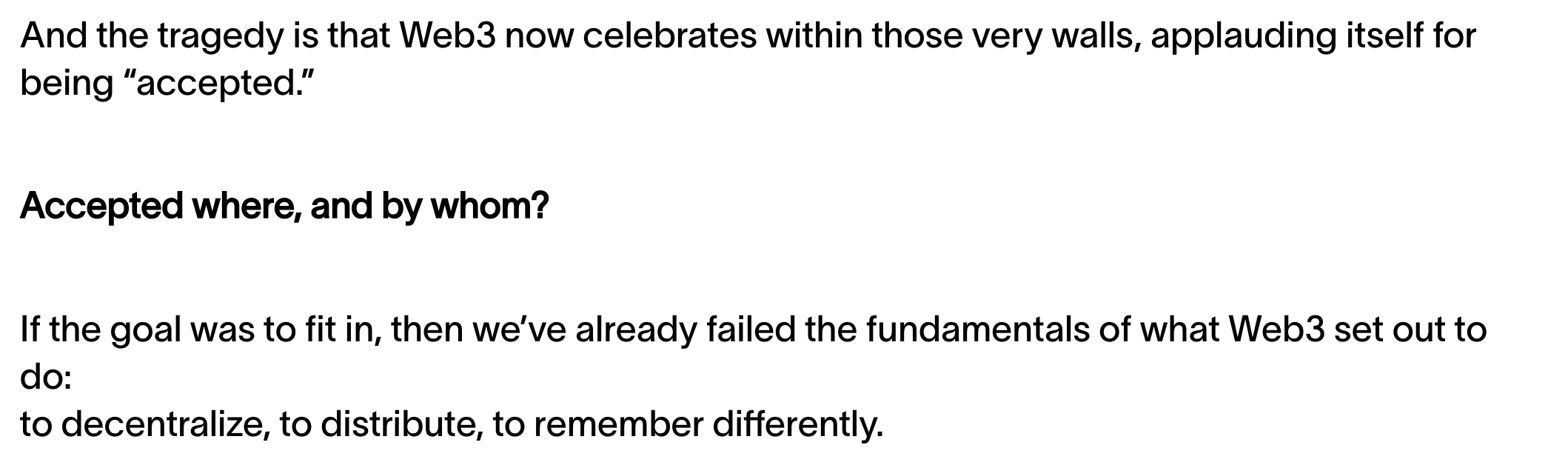
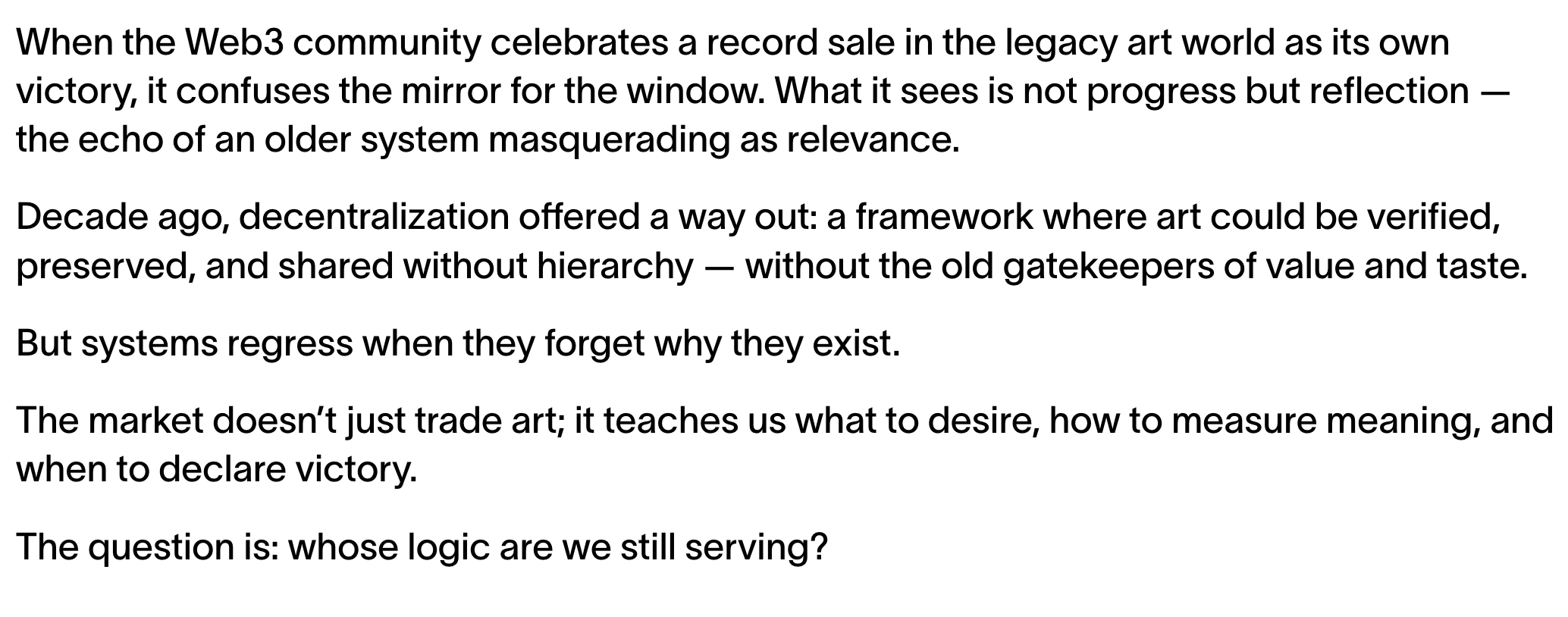
If we start playing by the rules of the last generation, we risk losing the things that made this space different in the first place. We risk dissolving into irrelevance while believing we are winning. Digital art entering Basel is a huge moment, but it only matters if it helps build a better market, not repeat the old one.
A medium growing up
That being said, Basel made one thing very clear. Digital art has moved past its skepticism era. The medium is not fully understood yet, but it is no longer dismissed. It stands with more confidence. It experiments without apology. It participates in the broader history of art instead of orbiting outside of it.
A medium is growing up, and the shift feels real and energizing.
We do not often get to witness a new artistic category become legitimate while it is happening. This moment feels like the start of that legitimacy. It feels like the beginning of something large and optimistic.
Digital art has arrived, and it is here to stay.
And if I had a wish for the space, it would be to stay weird, stay open, and.. did I mention weird?
P.S
There is a long list of builders, artists, organizers, and collectors who pushed this moment into existence. Benny (Redbeard) took the time to document the people who made Zero Ten possible and his indexing captures the true scale of what it took for digital art to show up the way it did in Miami. Rather than restating it, I want to point readers to his work and give credit where it belongs.
He is an important voice in the space, and the work he and Eli Scheinman have done will be recognized for a long time.